- 31/05/2026
- in Carpet Cleaning Tips
- by Ben Hobbs
- 76
- 0
Blog

If you are looking for advice on cleaning carpet from cat urine, you are not alone. Cat accidents can happen from time to time, and unfortunately cat urine can leave behind one of the strongest and most unpleasant odours found in a home. Even after the visible stain disappears, the smell may remain trapped deep within the carpet fibres, backing and underlay.
Many homeowners search for the best methods for cleaning carpet from cat urine because ordinary cleaning products do not always solve the problem completely.
The good news is that there are several steps you can take to reduce or remove cat urine smells from carpet. Acting quickly usually gives the best chance of success, but even older odours can often be improved with the right treatment.
Cat urine contains compounds that create strong odours as they break down over time.
When the urine dries, bacteria begin to develop and release unpleasant smells. In some cases, the urine can soak beneath the carpet surface and into the underlay, making the odour much harder to remove.
The longer the urine remains untreated, the stronger the smell may become.
One of the most frustrating things about cat urine is that the smell sometimes seems to disappear before returning later.
This happens because moisture and humidity can reactivate dried urine deposits hidden deep within the carpet. Even if the surface looks clean, odour-causing particles may still be present underneath.
This is why proper cleaning is important when dealing with pet accidents.
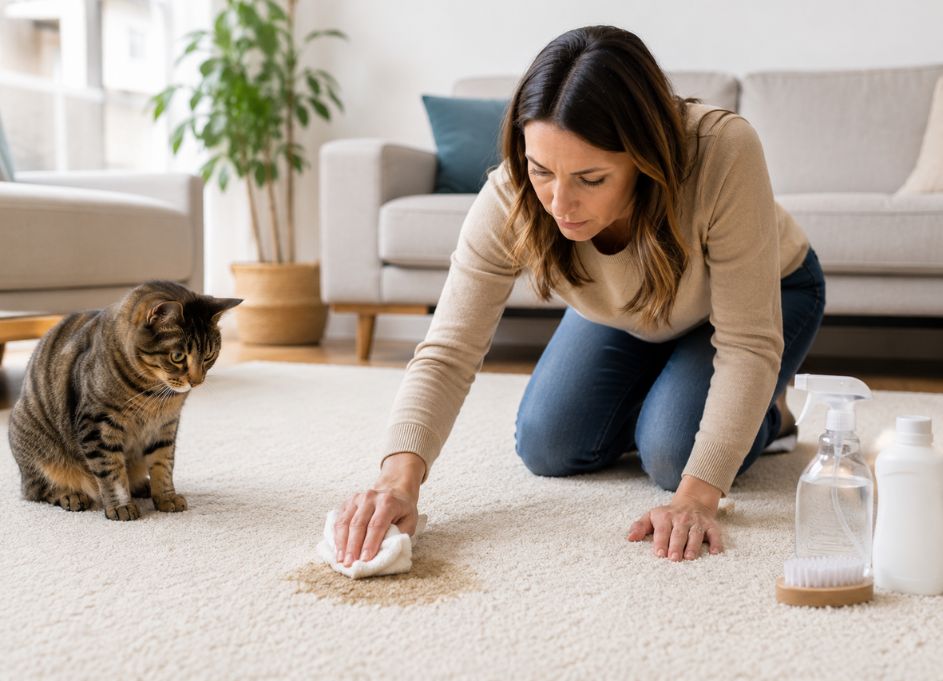
If the accident has just happened, quick action can help prevent the urine soaking deeper into the carpet.
Use paper towels or a clean cloth to absorb as much liquid as possible.
Press firmly without rubbing. Rubbing may spread the urine further into the carpet fibres.
Heat can sometimes make odours more difficult to remove because it may help set urine residues into the carpet.
For fresh accidents, it is usually better to focus on absorption and suitable cleaning treatments first.
A small amount of cool water may help dilute fresh urine before blotting again. Avoid soaking the carpet with excessive water.
Removing cat urine odours often requires more than basic household cleaning products.
The best approach usually involves:
For mild accidents caught quickly, home cleaning may help reduce odours significantly.
Older stains or repeated accidents often require deeper cleaning methods.
Some homeowners use simple household products to help reduce odours.
A mixture of white vinegar and water is commonly used because vinegar can help neutralise some odours.
Apply lightly to the affected area and blot carefully.
Always test any solution on a hidden section of carpet first.
Baking soda is often used to absorb lingering smells.
After the carpet is mostly dry, a light application of baking soda may help absorb remaining odours before vacuuming.
Results vary depending on the severity of the contamination.
Many cat urine smells remain because the urine has travelled beyond the visible stain.
DIY cleaning products often clean the surface but may not reach:
As a result, the smell may continue even after repeated cleaning attempts.
Professional carpet cleaning services use stronger extraction equipment that can remove more moisture, residue and contamination from deep within the carpet.
Professional carpet cleaning can often improve or remove cat urine odours, especially when the problem is treated before extensive contamination occurs.
Professional equipment helps remove:
In severe cases where urine has soaked deeply into the underlay, additional treatment may sometimes be needed.
The sooner professional cleaning takes place, the better the chance of reducing long-term odours.
Homes with pets generally benefit from more frequent carpet cleaning than homes without pets.
Professional cleaning every 6 to 12 months can help remove:
Regular cleaning also helps keep carpets looking and smelling fresher.
Pet owners often deal with more than just odours.
Carpets can also collect:
Professional carpet cleaning helps remove these contaminants while improving overall carpet hygiene.
For homes with multiple pets, regular maintenance can help prevent odours from building up over time.
Cat urine does not only affect carpets.
Rugs, sofas, chairs and other soft furnishings can also absorb odours and stains.
If pet accidents occur on rugs, professional rug cleaning may help restore freshness while protecting delicate fibres.
For sofas and fabric furniture affected by pet odours, upholstery cleaning can also help remove dirt and odour-causing residues.
In some situations, yes.
If urine remains untreated for a long period, it can potentially:
This is why treating accidents quickly is always recommended.
While accidents cannot always be prevented, there are steps that may help reduce the chances of future problems. If you have a cat, accidents can happen from time to time. Unfortunately, cat urine can leave behind one of the strongest and most unpleasant odours found in a home. Even after the visible stain disappears, the smell may remain trapped deep within the carpet fibres, backing and underlay.
Many homeowners search for the best methods for cleaning carpet from cat urine because ordinary cleaning products do not always solve the problem completely.
The good news is that there are several steps you can take to reduce or remove cat urine smells from carpet. Acting quickly usually gives the best chance of success, but even older odours can often be improved with the right treatment.
Cat urine contains compounds that create strong odours as they break down over time.
When the urine dries, bacteria begin to develop and release unpleasant smells. In some cases, the urine can soak beneath the carpet surface and into the underlay, making the odour much harder to remove.
The longer the urine remains untreated, the stronger the smell may become.
One of the most frustrating things about cat urine is that the smell sometimes seems to disappear before returning later.
This happens because moisture and humidity can reactivate dried urine deposits hidden deep within the carpet. Even if the surface looks clean, odour-causing particles may still be present underneath.
This is why proper cleaning is important when dealing with pet accidents.
If the accident has just happened, quick action can help prevent the urine soaking deeper into the carpet.
Use paper towels or a clean cloth to absorb as much liquid as possible.
Press firmly without rubbing. Rubbing may spread the urine further into the carpet fibres.
Heat can sometimes make odours more difficult to remove because it may help set urine residues into the carpet.
For fresh accidents, it is usually better to focus on absorption and suitable cleaning treatments first.
A small amount of cool water may help dilute fresh urine before blotting again. Avoid soaking the carpet with excessive water.
Removing cat urine odours often requires more than basic household cleaning products.
The best approach usually involves:
For mild accidents caught quickly, home cleaning may help reduce odours significantly.
Older stains or repeated accidents often require deeper cleaning methods.
Some homeowners use simple household products to help reduce odours.
A mixture of white vinegar and water is commonly used because vinegar can help neutralise some odours.
Apply lightly to the affected area and blot carefully.
Always test any solution on a hidden section of carpet first.
Baking soda is often used to absorb lingering smells.
After the carpet is mostly dry, a light application of baking soda may help absorb remaining odours before vacuuming.
Results vary depending on the severity of the contamination.
Many cat urine smells remain because the urine has travelled beyond the visible stain.
DIY cleaning products often clean the surface but may not reach:
As a result, the smell may continue even after repeated cleaning attempts.
Professional carpet cleaning services use stronger extraction equipment that can remove more moisture, residue and contamination from deep within the carpet.
Professional carpet cleaning can often improve or remove cat urine odours, especially when the problem is treated before extensive contamination occurs.
Professional equipment helps remove:
In severe cases where urine has soaked deeply into the underlay, additional treatment may sometimes be needed.
The sooner professional cleaning takes place, the better the chance of reducing long-term odours.
Homes with pets generally benefit from more frequent carpet cleaning than homes without pets.
Professional cleaning every 6 to 12 months can help remove:
Regular cleaning also helps keep carpets looking and smelling fresher.
Pet owners often deal with more than just odours.
Carpets can also collect:
Professional carpet cleaning helps remove these contaminants while improving overall carpet hygiene.
For homes with multiple pets, regular maintenance can help prevent odours from building up over time.
Cat urine does not only affect carpets.
Rugs, sofas, chairs and other soft furnishings can also absorb odours and stains.
If pet accidents occur on rugs, professional rug cleaning may help restore freshness while protecting delicate fibres.
For sofas and fabric furniture affected by pet odours, upholstery cleaning can also help remove dirt and odour-causing residues.
In some situations, yes.
If urine remains untreated for a long period, it can potentially:
This is why treating accidents quickly is always recommended.
While accidents cannot always be prevented, there are steps that may help reduce the chances of future problems. If your cat suddenly starts urinating outside the litter tray, it may be worth speaking with your vet, as behavioural or health issues can sometimes be the cause. Resources from Cats Protection UK can also provide helpful guidance for cat owners.
Useful tips include:
Early action is often the best way to prevent long-term odour problems.
The cost of professional carpet cleaning depends on factors such as room size, carpet condition and whether specialist pet odour treatment is required.
If you would like to learn more, you can view the latest carpet cleaning prices before booking.
Pet accidents can happen in any home, and quick treatment often gives the best results.
For homeowners looking for professional carpet cleaning in Milton Keynes, Hobbs Cleaning provides safe and effective cleaning methods designed to help remove dirt, stains and odours from carpets.
If cat urine odours have affected your carpets, professional treatment may help restore freshness and improve indoor comfort.
Hobbs Cleaning also provides carpet cleaning services in St Albans for homes, landlords and businesses.
The team also offers carpet cleaning across Hertfordshire, helping homeowners maintain cleaner, fresher carpets throughout the year.
Cleaning carpet from cat urine can be challenging because odours often remain hidden deep within the carpet fibres and underlay.
Quick action, careful treatment and proper drying can help reduce smells significantly. However, older or more severe odours may require professional cleaning to achieve the best results.
Regular carpet maintenance, prompt accident treatment and professional cleaning when needed can help keep your home fresher, cleaner and more comfortable for both pets and people.
The best approach is to absorb as much urine as possible, treat the area quickly and use suitable cleaning methods to remove odour-causing residues.
Cat urine can soak deep into carpet fibres and underlay. Moisture and humidity may reactivate hidden urine deposits, causing the smell to return.
Professional carpet cleaning can often reduce or remove cat urine odours by extracting residue, bacteria and contamination from deep within the carpet.
White vinegar may help neutralise some odours and is commonly used as a home remedy, although results vary depending on the severity of the contamination.
If left untreated for a long period, cat urine may stain carpet fibres, damage backing materials and create long-term odour problems.
Most homes with pets benefit from professional carpet cleaning every 6 to 12 months, depending on traffic levels and the number of pets.
Professional cleaning can help remove urine contamination, but fresh urine accidents should usually be treated quickly before applying heat-based cleaning methods.
Useful tips include:
Early action is often the best way to prevent long-term odour problems.