- 04/07/2026
- in Carpet Care Guides, Carpet Cleaning Tips
- by Ben Hobbs
- 36
- 0
Blog
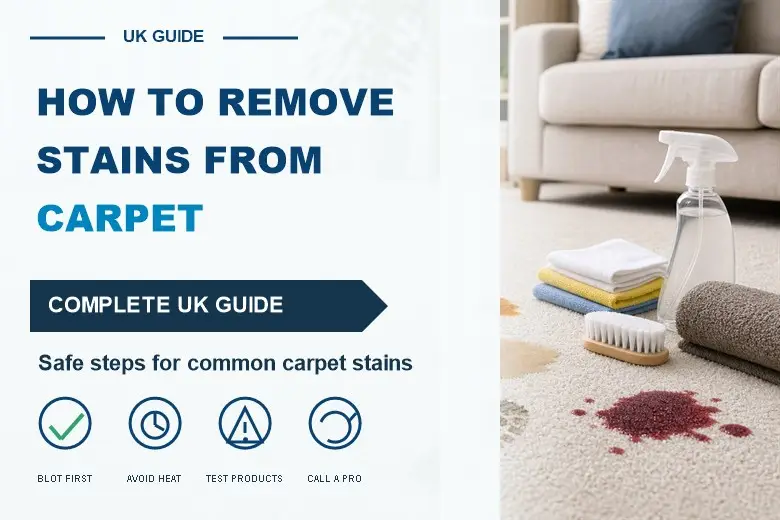
If you want to know how to remove stains from carpet, the safest first step is to blot the stain gently, avoid rubbing, use a suitable cleaning method for the stain type and avoid overwetting the carpet. Some fresh stains can be improved at home, but older stains, pet urine, red wine, blood, grease and odours often need professional carpet cleaning to avoid damage or repeat staining.
Stain removal results depend on the carpet fibre, stain type, age of the mark, what products have already been used and whether the stain has reached the backing or underlay. No cleaner should promise every stain will disappear, but the right first steps can improve the chance of a better result.
The best first step for most carpet stains is to remove loose material, blot liquid with a clean white cloth and work from the outside of the mark towards the centre. Use cool water first for unknown stains and keep moisture controlled.
Blot, do not scrub. Scrubbing can distort the pile and push the stain deeper. If the mark is large, old, sticky, dark or smells unpleasant, stop before applying strong products and consider professional carpet cleaning.
Act quickly, but do not panic. Lift any solids with a spoon or blunt edge, then blot the area with a clean white towel. Avoid coloured cloths because dye can transfer onto damp carpet.
If you use water, use a small amount. The aim is to dilute and lift the spill, not soak the backing. After blotting, let the carpet dry naturally with good airflow.
Need Help With Carpet Stains?
Hobbs Cleaning Ltd provides professional carpet cleaning and stain treatment support across Hemel Hempstead, Milton Keynes, St Albans, Hertfordshire and nearby areas. If a stain is not improving or you are worried about damaging your carpet, our team can help.
Do not rub aggressively, pour water directly onto the carpet or use bleach-based products unless the carpet manufacturer specifically allows it. Heat can also set some stains, especially protein stains such as blood.
Do not mix cleaning chemicals. Do not keep applying different products if the first attempt fails. Repeated harsh treatment can change the carpet colour, leave residue or make professional stain work harder.
Different stains need different treatment. The table below gives quick practical guidance, but always test any product in a hidden area first and stop if the carpet colour changes.
| Stain Type | What to Do First | What to Avoid | When to Call a Professional |
|---|---|---|---|
| Red wine | Blot gently and dilute carefully with clean water | Rubbing or using strong bleach-based products | If the stain has dried or spread into the fibres |
| Tea or coffee | Blot quickly and use a mild suitable cleaning approach | Overwetting or scrubbing the area | If the mark has turned brown or keeps returning |
| Pet urine | Blot moisture and avoid masking the smell with perfume | Using too much water or strong household chemicals | If odour remains or urine may have reached the underlay |
| Grease or oil | Blot excess and avoid spreading the mark | Hot water or rubbing the stain deeper | If the stain is sticky, dark or still visible after drying |
| Blood | Use cold water only and blot gently | Hot water, which can set the stain | If the stain has dried or is on a delicate carpet |
| Old stains | Test any treatment in a hidden area first | Repeated harsh treatments that may damage fibres | If previous DIY attempts have failed |
For red wine, blot as much liquid as possible and avoid rubbing. A fresh mark may improve with careful dilution and blotting, but dried red wine can be difficult because colour can bond with the fibres. See the Hobbs guide on how to clean red wine from carpet for more detail.
Tea and coffee can leave brown tannin marks, especially if the spill is hot or has dried. Blot quickly, avoid overwetting and do not scrub the pile. For tea spills, read the Hobbs guide on how to clean tea out of carpet.
Let mud dry before vacuuming loose soil, then treat the remaining mark gently. Wet scrubbing can spread mud through the fibres and make the area larger. If mud has mixed with traffic grease, professional cleaning may be safer.
Blot fresh urine quickly and avoid masking the odour with perfume. If the smell returns after drying, the urine may have reached the backing or underlay. The Hobbs guide on cleaning carpet from cat urine explains why odour can be difficult to treat at home.
Grease and oil need patience because rubbing can spread the mark. Blot excess first and avoid hot water unless you are sure the method is suitable. If the area stays sticky or dark, stop DIY treatment.
Use cold water only for blood and blot gently. Hot water can set protein stains and make them harder to improve. For more specific guidance, read how to get blood out of carpet safely.
Old stains may have already oxidised, soaked into the backing or been affected by previous cleaning products. DIY may still improve appearance, but repeated harsh treatment can permanently damage colour or texture. Old food marks, high-traffic stains and stains that keep coming back are often better assessed professionally.

DIY stain removal is useful for small fresh marks where you know what caused the spill. Professional cleaning is better when the stain is old, large, smelly, greasy, unknown or linked to pet accidents. Professional equipment can also rinse and extract more effectively than repeated spot products.
If drying time worries you, read the Hobbs guide on how long carpet cleaning takes to dry. Slow drying can make odours worse, especially when too much water has been used.
Call a professional if a stain is spreading, returning after drying, smelling unpleasant or changing the carpet colour. It is also safer to get help for wool-rich carpets, delicate fibres, old stains, pet urine, blood, grease and large high-traffic areas.
Professional cleaning is safer when the wrong DIY product could cause permanent damage. The Hobbs article on why professional carpet cleaning is worth it explains the value of correct method choice, extraction and realistic stain advice.
Stains can come back when residue, moisture or contamination remains below the surface. Blot spills quickly, use the smallest sensible amount of moisture and let the carpet dry fully before heavy use. Regular vacuuming also helps because dry soil can make spills harder to treat.
If a mark keeps returning, it may be wicking up from deeper fibres or backing. At that point, more spot cleaner may only add residue.
Hobbs Cleaning Ltd helps homeowners with professional carpet stain removal and carpet cleaning across Milton Keynes, Hertfordshire, St Albans, Aylesbury, and Dunstable and Luton.
For a quote, check current carpet cleaning prices or contact Hobbs Cleaning Ltd. Tell the team what caused the stain, how old it is and what products have already been used.
Ready to Book Professional Carpet Cleaning?
If a carpet stain is old, smelly or keeps returning, professional cleaning may be better value than repeated DIY attempts.
The best first step is to blot the stain gently with a clean white cloth and avoid rubbing. Use a method that matches the stain type and keep moisture controlled. If the stain is old, greasy, smelly or unknown, professional advice is safer.
Some old carpet stains can be improved, but not every old stain can be removed completely. Results depend on the fibre, stain type, stain age and what products have already been used. If previous DIY attempts have failed, a professional inspection is sensible.
Avoid bleach, harsh chemicals, hot water on blood, coloured cloths and too much water. Do not mix cleaning products. Strong or repeated treatments can damage colour and texture.
Yes, rubbing can spread the mark and push staining deeper into the pile. It can also distort carpet fibres, leaving the area looking fuzzy or worn. Blotting is safer because it lifts moisture without scrubbing the pile.
Professional cleaning can often improve pet urine stains and odours, but results depend on how deep the urine has travelled. If it has reached the backing or underlay, the smell may be harder to remove fully. A professional cleaner can assess what is realistic before treatment.
Call a professional when the stain is old, large, dark, greasy, smelly or keeps returning after drying. You should also get help if the carpet is delicate or if DIY products have already failed. Acting before repeated treatment can reduce the risk of permanent damage.